“You win some, you lose some”. Remembering the man who brought handball to Ireland - Lindsay Pennycook
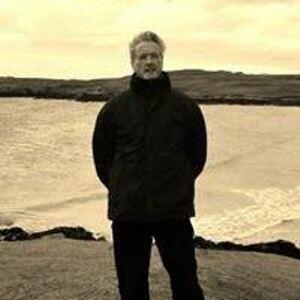
As Olympic Handball Ireland marks its 50th anniversary, the story of the sport is inseparable from the people who championed it. In this heartfelt conversation with OHI Chairman Fintan Lyons, Aisling Pennycook reflects on her father Lindsay Pennycook, the PE teacher and visionary who brought Olympic handball to Ireland. It's a look at the personal heart, fearlessness, and deep community roots behind half a century of Irish handball.
In conversation with Aisling Pennycook, daughter of Lindsay, Founder of Olympic Handball Ireland, and Fintan Lyons, Chairman of OHI.
Fintan: Aisling, I knew your Dad as Lindsay the sportsman! But tell me, what are your memories of him as a child?
Aisling: Oh Dad could never not be a sports person. Every game we played as kids was sports-related - even on holidays we’d be doing long jumps on the beach! I have this vivid memory of him standing there with his whistle around his neck; he was a PE teacher through and through.
Fintan: That athletic presence is exactly how I remember first meeting him! Lindsay was my PE teacher at Tallaght Community School - the very first community school in Ireland. There were a lot of firsts associated with the birth of handball in Ireland! I came to the school in second year, I was about 11, right around the time the school was fitted with state-of-the-art track and field facilities - we took it for granted at the time but it wasn’t standard stuff.
Before Lindsay, our PE teacher Maggie Ryan was all about basketball. Then Lindsay walked in: a tall, remarkably fit man who was holding down his place as goalkeeper for the Great Britain Handball team. He was so charismatic. Everyone in the school knew Lindsay, he was an extraordinary man. Now I look back I realise he wasn’t that much older than us kids.
Aisling: Handball was so special to him. But at home, his drive was always channeled into us kids and seeing us do well. My sister Catriona - the oldest - was named because Dad wanted to see "The Cat" (the fastest) in the paper! My other sister Siobhan was a brilliant sprinter and hurdler, and Dad took her to her club every weekend. My brother, Oisin, is a brilliant soccer player - he played on the Irish doctors team in the World Cup for Doctors. As for me, I wanted to be by his side so much that I started out as his little spectating shadow. I’d done Irish dancing instead, though eventually I gave that up to learn to run. He’d cycle next to me while I did laps around the pitch.
Oisin and Siobhan became doctors whilst Catriona followed in Dad’s footsteps with psychology and is also a primary school teacher like myself. My mum just retired from teaching this summer.
Fintan: He was an incredible athlete - an All-Ireland champion hurdler, if I recall. But he needed to maintain his own form for the GB squad, so he decided he was going to bring handball to us! He had us build a set of goals in the school workshop, brought in a box of handballs and set to work. We were his guinea pigs! But we all loved it of course.
He had a rare gift for imbuing confidence in young people. Tallaght back then was essentially a massive building site - a very new town - and a lot of us kids didn't have local roots. I was a working-class kid who had moved over from Shepherd’s Bush (and back then, having an English accent in Dublin wasn't easy!) But Lindsay brought us together and gave us a place. He took us working-class kids seriously. He used to say that handball was a synthesis of gymnastics, athletics, and basketball; it was focused on skill rather than brute force, and therefore it was accessible to anyone.
Aisling: Yes he loved the inclusivity of it. Dad was a committed socialist for sure! He was so passionate about social issues. He genuinely should have been a politician, but he chose to share his knowledge with the direct community instead. Honestly, he was as much a psychologist as a coach.
Fintan: Oh, he was totally left-wing! Some of the other coaches used to jokingly call us the "Politburo." Lindsay was dedicated to making handball egalitarian. He got us to travel to Sheriff Street - one of the most deprived areas in Dublin at the time - to coach the younger kids there because he wanted them to have the same opportunity to play.
Aisling: That carried through his whole career. Later, when he taught at Inchicore College of Further Education, he’d run lifesaving classes in the local pool every Friday. So many of his students came from tough backgrounds, and he gave them a path toward a better life. He adored his work. And I’m sure he had a positive impact on a lot of kids.
Fintan: He wanted to build connections between people and cultures - he’d often talk passionately about the Celtic diaspora. He organised trips for us to play teams in Scotland.
Here’s one great story for you. It was 1979, right as the Troubles were kicking off. We were in a minibus crossing the border to get the ferry, accompanied by Lindsay and his good coaching friend Colin from Newpark, when a military Saracen armored vehicle pulled us over. Young soldiers with guns surrounded us asking us where we were going, what we were doing etc. Of course, guns and soldiers … It was a little bit intimidating.
Well out of nowhere, one of our teammates, Declan Carroll - an absolute messer - flings the minibus door open, legs it across the road and high jumps over a wall. Well, I tell you all those soldiers’ guns instantly swivelled towards him and our hearts were in our mouths. And there’s Declan grinning back at us, taking a leak! Once everyone realised what was happening, both sides burst out laughing.
Aisling: That sounds like one of Dad’s trips. He was fearless. But you know, alongside sports and politics, he also had a big passion for music. All of us kids played traditional Irish music at a high level - we played in the Fleadh for years.
In fact, I can thank my Dad for how I met my husband, Richie. We first met at my Dad’s wake, although I didn’t see him again for a long time. But we crossed paths again playing music in the Cobblestone in Dublin. He’s a musician, and, in a beautiful full circle moment, Richie is now involved with the Olympic Handball Ireland event - he’s playing in the evening - getting to experience a bit of my Dad’s legacy.
Fintan: You need a bit of fearlessness to start a brand new sport in Ireland - GAA sports are so ingrained in culture you’d think it almost impossible, but Lindsay was a dreamer who backed his dreams with hard work. He built the foundation for Irish handball from scratch. We’ve a lot to thank him for in that respect.
Aisling: Here’s a story for you now. Dad met my mum, Davnet, slightly later in life - he was 38 and they crossed paths at a disco. He remembered her phone number off by heart! She told me, ‘I thought, if that Scottish guy manages to remember my number and calls me, I’ll have to say yes to a date!’ They got married and had four kids quite quickly so it was obviously meant to be. And then Dad chose to step back from public coaching so he could give us all his focus. Like everything that Dad did, it was a conscious decision.
Fintan: It must have been exceptionally hard for you all to lose him.
Aisling: It’s only now I feel able to talk about him. Losing Dad was deeply traumatic. But even his terminal diagnosis comes with a “Dad” story!
When he was diagnosed with Stage 4 stomach cancer, the doctors gave him just four weeks. But because he was so fit and mentally tough, he fought for another 16 months - long enough to see me finish my Leaving Cert. Even near the end in St. James’ Hospital, he was doing laps of the ward, high on morphine, talking passionately about Celtic Football Club. The staff all loved him too. I think that says a lot about who Dad was.
Fintan: He’s left that legacy in handball. We focus on hard work and positive attitude, supporting people and giving everyone the same opportunity. We still want to deliver Lindsay’s vision. It’s not easy running as a volunteer organisation, but those values remain.
How do you hope he’s remembered by our community today, given we’re celebrating 50 years of existence, which is really all thanks to him?
Aisling: Dad chose to help the people who needed it most. He had a vision, not just for sport, but for education, community and life. He left the world so much better than he found it. He had faith in people and wasn’t afraid of trying new things.
We will always remember Lindsay for his kindness, empathy and motivation to inspire others.


Cookie Policy I Privacy & Data Protection
© Olympic Handball Ireland | Produced by
